Clinician-scientist · Computational research · Clinical AI · Technology strategy

AI in medicine can fail long before the model.

I work across the whole chain: how clinical measurements are made, how those measurements become data, and whether AI built on them can be trusted.

PhD in Medicine · University of Melbourne

Perth, Australia · Open to research, industry and advisory opportunities · Download CV ↓

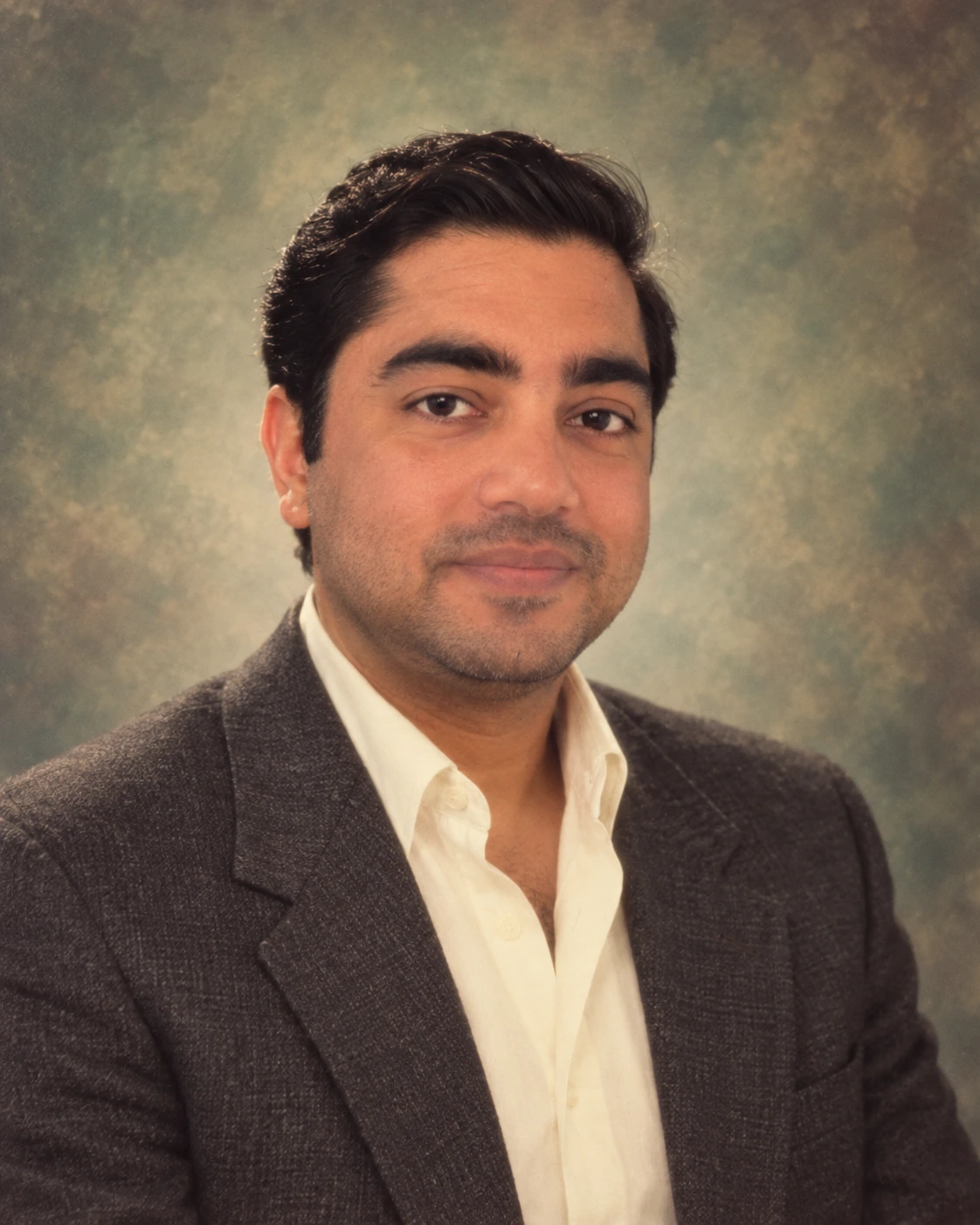
Dr Vasanth Muthusamy
01 / About me

What drives
my work.

Clinical practice taught me early that data are only as good as the measurement behind them, and that noise can look like signal. Learning to tell them apart has shaped my whole career. The settings changed—clinic, research, translation, now data and AI—but the question didn’t: what can we trust enough to act on?

I’m at my best where AI meets the real world: messy data, uncertain labels and decisions that matter. I bring a clinician’s sense of what data really mean, a scientist’s rigour about whether results hold up, and a commercial eye for what is worth building. That’s the work I want to be doing: making AI dependable where being wrong has a cost.

Clinical judgementMeasurement & evaluationData science & AIProduct & commercial strategy
02 / How I got here

I’ve worked at every point
where it breaks.

Medical AI doesn’t usually fail in the model. It fails at the handoffs: between the patient and the measurement, between the measurement and the data, and between the evidence and the decision to act. I’ve worked at each of them.

Measure, doubt, then decideIllustration, not real data
  1. Clinic · 2014–2016

    Before it becomes data

    Optometrist, Sankara Nethralaya · later optical care in Australia

    Consulted patients in primary eye care at a high-volume tertiary eye hospital and led a diagnostic imaging clinic—learning how clinical data are generated, and what a single result means to the person behind it.

  2. Research · 2014–present

    How measurements behave

    MPhil, BITS Pilani · Junior Research Fellow, Vision Research Foundation · PhD in Medicine, University of Melbourne

    Biological neurons are noisy: show the same faint light twice and the visual system may respond differently. My research asked how to read a reliable signal from that neural noise; my PhD made a vision test more informative in the same time by spending effort where it adds most information.

    Disease-prediction models · Machine learning · Epidemiology · Clinical research · Clinical electrophysiology · Clinical instrumentation & evaluation

  3. Research translation · 2022–2023

    Whether it’s worth building

    Research Commercialisation & Business Development Intern, University of Melbourne · Assistant Grants Advisor, WEHI

    Is the science sound, is there a real need, and is it worth backing? I bring researchers, industry partners and decision-makers together to answer those questions—across infectious disease, immunology, gene therapy and medical technology.

    Pharma–university partnerships · Due diligence for go/no-go decisions · Early IP to a digital-health company · ~20 NHMRC applications shaped · Regulatory, reimbursement & market access

  4. Data & AI · 2023–present

    Where data and AI meet practice

    Research Data Manager, Lions Eye Institute

    Today I make clinical data usable and AI accountable: turning fragmented records into research-ready evidence, testing large language models against clinical judgement, and running the clinical research and services that put both into practice.

    Data linkage & standardisation · OMOP → FHIR/HL7 · RWE · LLM evaluation · GCP trial operations · Ethics & governance · Clinician & KOL engagement

03 / Research

Where it breaks,
in practice.

Each of these studies shows a different way the chain fails before any model is involved: where you measure, whose judgement counts, what changes when the instrument does, and what people actually need.

Adaptive sampling

MeasuredFewer repeats where readings are noisyAdded where the signal changes fastestIllustration, not patient data
PhD research · First author · 2020

Every measurement has a budget.
Spend it where it counts.

Every measurement budget is finite, and where you spend it decides how much you learn. My PhD research tested that idea in a clinical setting.

ARREST stops re-sampling points where repeated readings are too noisy to be informative, and redirects that effort to where the underlying signal changes fastest. Same budget, more information.

What we found: about seven additional locations on average in 23 people, with a similar number of stimulus presentations (259 vs 261).

Adaptive sampling: labels, compute and inference all have a cost. Spend effort where the next observation adds most information to the decision.
Methods & limitations

ARREST was compared with conventional ZEST testing and a separate best-available estimate of sensitivity. It redirects effort from locations below 17 dB towards additional spatial sampling. This was a small, cross-sectional clinical evaluation; it does not establish performance for detecting progression over time, or in other domains.

Read the study ↗
Expert judgement · Manuscript in preparation

Ground truth is expert judgement.
And judgement varies among experts.

Does more information change an expert’s decision? We asked an international panel of 18 experts where extra measurements would be most useful, first from the test result alone and then with additional imaging added, and compared their choices with their own and with each other’s.

Label noise: labels come from people, under conditions you choose. What you show an annotator shapes the label, and adding a data source doesn’t guarantee a different—or better—decision. Measure both before treating labels as ground truth.
Evaluation data · Co-author · 2026

You can’t evaluate without
a known answer.

LEI-SFD is an open synthetic dataset where the right answer is known in advance: paired structural and functional measurements with simulated rates of disease progression, so methods for detecting change can be compared against a known truth.

Benchmarks: known simulated outcomes allow controlled comparisons; performance still needs testing on real clinical data.Read the dataset paper ↗
Real-world evidence · Co-author · 2026

When the method changes,
the evidence can change.

You can gain speed or keep accuracy—rarely both. The same machine can run a quicker testing algorithm, and in a population-scale study of 2,519 eyes drawn from years of routine monitoring, the faster strategy was more likely to miss subtle signs of disease that the established strategy had detected consistently.

Speed–accuracy trade-off: approximating to save time changes what the data contain, even on the same hardware. Models trained before and after inherit that difference.Read the study ↗
Human-centred research · First author · 2022

Ask people what they value.
Before you build the product.

What do patients want from a demanding vision test? An anonymous mixed-methods assessment with 152 complete responses found that people preferred getting more information within a similar test time over simply a shorter test.

User need: the team’s objective isn’t automatically the user’s. Find out what people value before optimising for it.Read the study ↗
04 / Current work

Systems that know when to doubt.
And when to act.

Five questions I’m working on—in my own research, in the studies I run, in the work I supervise, and in what I’m building.

Active project · Clinical AI evaluation

When does a model infer what the note never said?

I developed and ran an evaluation of how large language models extract clinical relationships from notes, and where their inferences part company with a clinician’s. Scored against clinician-reviewed annotations, it examines whether outputs preserve relevant context and separate what the note supports from what remains uncertain.

Active research

Is the change real?

When a measurement suddenly worsens, is it signal or noise—and when is a second check worth its cost? I’m studying how prior history, measurement variability and the cost of false reassurance should shape that decision. The same question applies to every model alert and monitoring dashboard.

Research direction

Conversational AI that knows its limits

When a question is vague or the evidence is thin, a good clinician asks, qualifies or refers. That principle is where I’m taking this work: conversational AI that knows when to ask, when to hedge and when to say it doesn’t know.

Ongoing research

Evidence that changes practice

Generating real-world evidence from routine care, and designing the studies that tell a clinician, a regulator or a buyer whether something actually works.

Research direction

Measurement outside the clinic

Monitoring is moving into people’s homes, which changes who takes the measurement, on what device, and under what conditions. I’m interested in what that does to data quality—and what has to be true before AI is trusted with it.

05 / Selected publications

Selected work.

Explore on PubMed ↗ Google Scholar ↗ ORCID ↗
2026

Small areas of damage due to glaucoma are less likely to be identified by SITA-Faster than SITA-Standard

Optometry and Vision Science · Co-author

↗
2026

A Structure–Function Dataset With Known Rates of Glaucomatous Progression

Translational Vision Science & Technology · Co-author

↗
2022

Patients’ Views of Visual Field Testing and Priorities for Research Development and Translation into Practice

Ophthalmology Glaucoma · First author

↗
2020

Increasing the Spatial Resolution of Visual Field Tests Without Increasing Test Duration: An Evaluation of ARREST

Translational Vision Science & Technology · First author

↗

Recognition and professional training

06 / Ways to work together

Bring me in early.
Before the data decides the outcome.

For AI and digital health teams, clinical and medical research groups, and organisations evaluating their next opportunity. Since 2014 I’ve led project teams across clinical, engineering, research and commercial settings—usually on work that had no single owner.

Lead clinical AI and evaluation

Define how clinical AI is evaluated: the reference standard, clinically meaningful errors, and the data quality and governance needed to interpret performance.

Senior and leadership roles · Contract programmes

Lead clinical research and evidence

Bring study design, protocol and ethics processes, GCP study operations and real-world evidence together—with clinician engagement throughout.

Clinical research · Clinical and medical affairs opportunities

Shape scientific strategy and engagement

Translate scientific evidence into clear decisions through evidence plans, expert engagement, scientific communication and business cases.

Evidence roadmaps · Scientific exchange · Business cases

Advise on translation and partnerships

Assess scientific credibility, clinical need and commercial potential to inform investment and partnership decisions.

Due diligence · Executive briefs · Partnership assessment

DeliveredGCP-compliant operations, ethics and data infrastructure for a longitudinal clinical study · an international expert-judgement study I conducted with a panel of 18 experts across four countries · an online scientific exchange I convened for ~45 international experts · published real-world evidence and patient-priorities research · large-scale clinical data linkage and standardisation · an expanded home eye-pressure monitoring service across multiple clinicians · project teams led across clinical, engineering, research and commercial settings since 2014

07 / Start a conversation

What are you trying
to find out?

Roles, contracts, advisory work and research collaboration. I’m in Perth, I work well remotely, and I’ll get on a plane for the right problem.

Meeting at a conference? Say hello ↗

Email me ✉Connect on LinkedIn ↗Perth, Western Australia · Remote, or wherever the work is